Long-term loneliness and social isolation of Louise
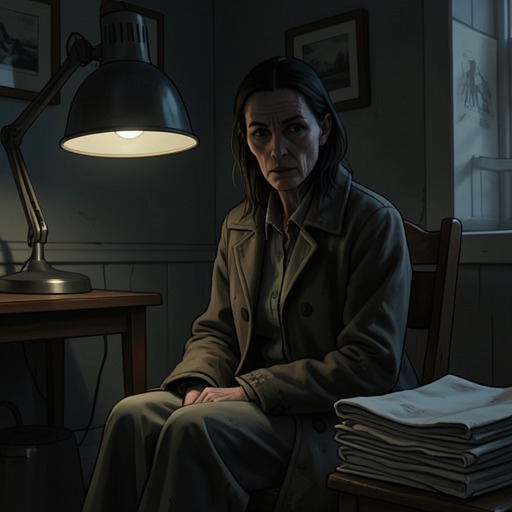
Chanson douceLouise’s long-term loneliness and social isolation are not simply a private sadness but a condition structured by broken family ties, economic insecurity, and the unstable intimacy of domestic work. Her days can be indispensable to the Massé household while her own place in it remains unspoken; when the work and its routines recede, the city fills with people who seem to belong somewhere, and Louise becomes an observer moving among them without a destination of her own.
Isolation Before the Hotel Room
Louise’s estrangement from her daughter, Stéphanie, is one of the clearest histories behind her isolation. When they lived together, Stéphanie complained that Sundays offered none of the activities Louise arranged for the children she cared for. She began going out all night with neighborhood teenagers, returning hungry in the morning to eat from the food Louise had prepared for Jacques. She dyed her hair red, pierced her nose, and started disappearing for whole weekends. Eventually she did not come home. The account makes the departure gradual rather than sudden: long before Stéphanie vanished, she had been leaving the household in every way available to her.
After Louise declared her daughter missing, she was told that a teenage runaway would probably return. She did not search for Stéphanie. Neighbors later said the young woman was in the south, in love, and moving from place to place, but Louise did not ask them for more. The silence around this loss is striking beside the intensity of Louise’s later attachments to the children she minds: the narrative presents a mother who has stopped pursuing her own daughter while pouring care into other people’s families.
Isolation is also visible in small encounters before it becomes a sustained state. On the RER, Louise watches an exhausted older passenger sleeping against the window and repeatedly considers waking him in case he misses his stop, but decides it is safer not to speak to strangers. She remembers a young woman who once nearly slapped her for staring. Observation, which will later become her way of occupying the city, begins as a guarded substitute for contact.
Work, Intimacy, and an Unspoken Place
The Massés’ first impression of Louise is reinforced by a former employer’s recommendation. The woman describes Louise as a second mother to her two boys and says that separation was heartbreaking; she had even considered having a third child to keep Louise. This praise testifies to the depth of Louise’s caregiving, but also to a recurring limit: a family can experience her as essential and still part with her.
With the Massés, domestic routines make Louise indispensable. She records school and dance schedules, appointments, medicines, prices, and even the exact words Mila’s teacher has said in a small flower-covered notebook. She reorganizes the home, cooks meals that bring the family and their guests together, and cleans and prepares for the children even after Myriam tells her she can go home. The more Louise takes on, the less the family needs to call for her help; her labor becomes almost invisible at the same time that the household depends on it.
That dependence does not resolve the question of where Louise belongs. After Paul and Myriam return from a late night out, they find her asleep on the sofa, curled up with her hands joined. Paul covers her and says they should not wake her. She begins sleeping there once or twice a week. No one explicitly discusses the arrangement, but the narration describes her as patiently building a nest in the apartment. Paul worries that the family may be exploiting her, while Myriam feels both embarrassed by the extra work and secretly pleased to receive it. Their apologies and Louise’s assurance that she is there for precisely this purpose preserve a polite surface over an increasingly blurred boundary between employment and belonging.
Solitude as a Place Without an Address
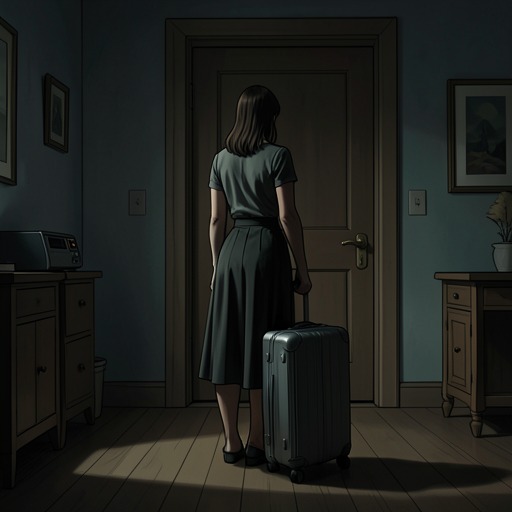
After leaving the little house, Louise pays for a hotel room a week in advance and eats sandwiches in front of the television. At dusk, sounds from homes occupied by several people—laughter, breathing, even sighs of boredom—make solitude seem to cling to her body and clothes. It begins to alter her appearance and gestures, giving her the manner of an old woman. The room is shelter, but it does not make her feel housed in the deeper sense of having a place within anyone’s life.
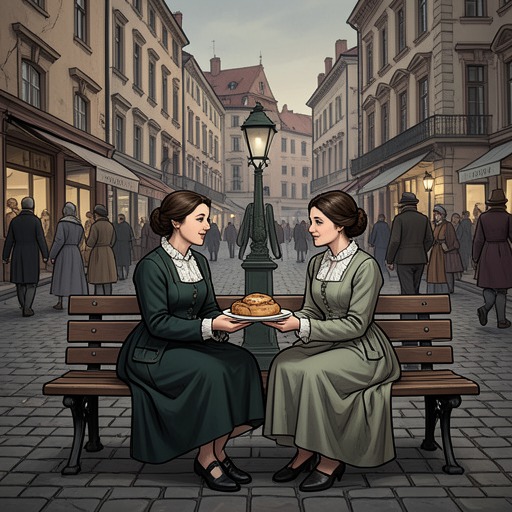
In a room in the Chinese quarter, time loses its shape. Louise sleeps for hours, wakes with swollen eyes and a painful head, and goes out only when hunger becomes insistent. Walking through the streets, she feels like a spectator absent from the film set of the city’s movement. Everyone else seems to have somewhere to go. The contrast turns ordinary urban motion into a measure of exclusion: other people’s destinations are visible, while hers is reduced to the urgent need to find food.
Yet this solitude also sharpens her attention. Louise studies couples at café terraces, abandoned old people exchanging sideways glances, students pretending to revise on a bench, and people waiting impatiently near metro stations. She waits alongside them for appointments that are not hers, and encounters solitary talkers, people in distress, and homeless people. The city, she thinks, is populated by mad people. Her isolation does not make her indifferent to others; it makes their gestures newly vivid, even as she remains outside their connections.
The Return of the Routine
The routine of caregiving can briefly interrupt Louise’s isolation without curing it. When bad weather keeps Mila and Adam indoors, she invents games and songs, builds a cardboard house with them, and rocks feverish Adam in her arms for nearly an hour. Her attention to the children is concrete and continuous, an everyday intimacy made of time, touch, and practical care. But its setting is still the Massés’ home, and the attachment remains part of a working relationship rather than a secure family bond of her own.
The fragility of that structure appears when exhaustion overtakes her. One afternoon Louise wakes in panic after sleeping through the time she should have collected the children. She searches for her shoes and apartment keys, runs into the street, and reaches the school only to realize that the children are on vacation. The fear is real, but so is the absence waiting beneath it: there is no child to meet and no task that needs her. The episode exposes how thoroughly her sense of purpose has become tied to the schedule of other people’s family life.
The novel’s treatment of loneliness gathers force through these contrasts: Louise is praised as a second mother, needed to keep a household functioning, and allowed to sleep on its sofa, yet none of those forms of closeness guarantees a home of her own. Her isolation is at once social and spatial—the missing daughter, the hotel room, the city traversed without destination—and it changes her into an exceptionally attentive witness to other people’s lives. That attention offers a kind of contact, but not a way back into the communities she watches.